How to Plan a Reliable Edible Oil Processing Plant
Production Capacity:

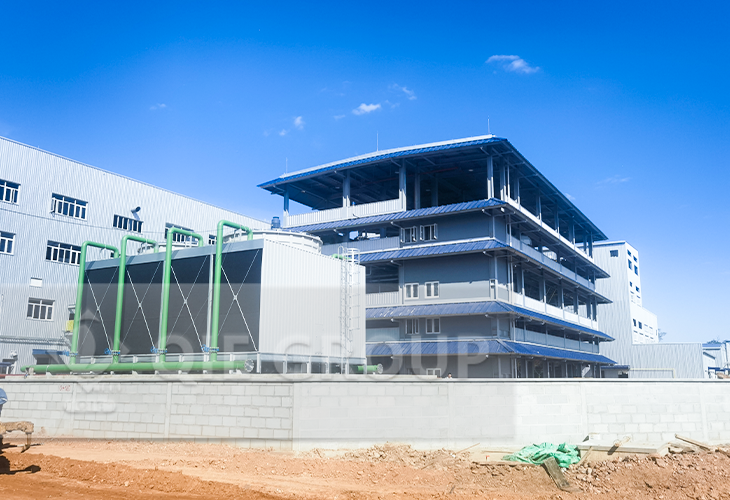
Planning an edible oil processing plant is a systems-engineering task, not simply an equipment purchase. Feedstock properties, finished-oil specifications, throughput, utilities, food safety, automation, site constraints, and future expansion all affect one another. Decisions made during concept design determine whether the plant will operate steadily, meet quality targets, and remain economical over its service life.
This guide provides a practical framework for owners and project teams preparing a new plant or expanding an existing facility. Final process parameters and regulatory requirements should always be confirmed by qualified engineers and the authorities in the project location.
Start with a written design basis. Soybean, sunflower seed, rapeseed, peanut, cottonseed, rice bran, corn germ, palm fruit, and palm kernel differ in moisture, oil content, storage behavior, preparation needs, and suitable extraction routes. Seasonal variation and incoming impurity levels should also be documented.
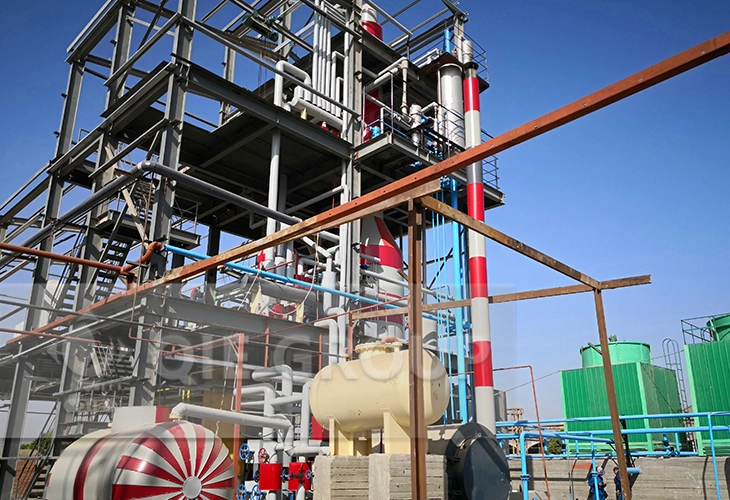
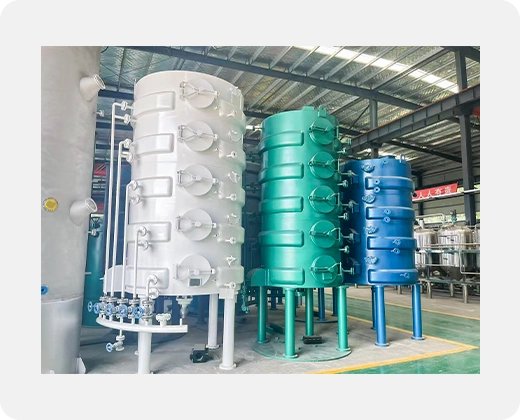
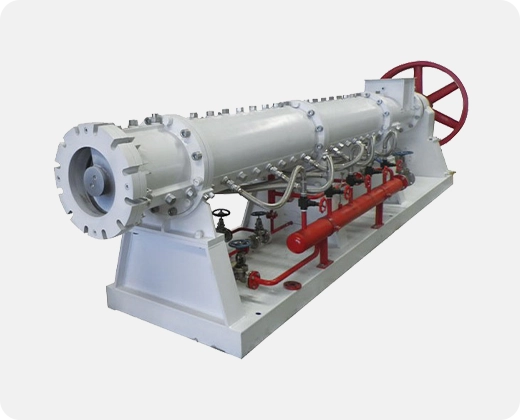
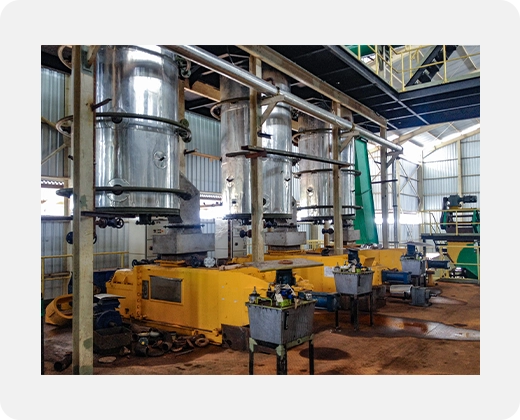
Next, define the saleable products: crude oil, refined bulk oil, specialty fractions, packaged consumer oil, meal, cake, soapstock, gums, or other by-products. Product requirements determine whether the project needs pretreatment, mechanical pressing, solvent extraction, degumming, neutralization, bleaching, deodorization, dewaxing, fractionation, storage, and filling. The QIE oil press plant overview illustrates the main preparation and pressing stages for oilseeds.
Nominal capacity alone is not enough. Record operating hours per day, planned annual days, expected availability, peak feed rate, product yield assumptions, and storage autonomy. Build a material balance covering incoming seed, crude and refined oil, moisture, hulls, meal or cake, process losses, wastewater, and by-products.
Every section must have compatible throughput. Cleaning, crushing, flaking, conditioning, pressing or extraction, filtration, refining, tank storage, and packaging should be checked as one line. Appropriately sized buffer bins and tanks can absorb short disturbances, but they cannot permanently correct an undersized process stage.
The route should be chosen using laboratory data, representative raw-material samples, target oil quality, local solvent and emissions rules, operator capability, and a lifecycle cost comparison. Avoid transferring assumptions from one oilseed directly to another.
Prepare load lists for electricity, steam, cooling water, process water, compressed air, vacuum, fuel, nitrogen where required, wastewater treatment, and fire protection. Evaluate both average and peak demand. Utility reliability can be as important as installed process capacity.
Heat integration, condensate return, insulated piping, efficient motors, variable-speed drives, and correctly sized pumps can reduce operating costs. The U.S. Department of Energy provides official industrial steam-system assessment resources that are useful when reviewing energy-recovery opportunities.
The layout should provide safe access for operation, cleaning, inspection, and equipment removal. Separate raw-material handling from refined-oil and packaging areas. Allow space for laboratories, chemical storage, workshops, electrical rooms, truck movement, drainage, fire access, and future expansion. A coordinated 3D layout can reveal clashes before fabrication and site installation.
Quality control begins in the process design. Identify sampling points and critical operating variables such as temperature, moisture, residence time, vacuum, chemical dosage, filtration performance, and storage conditions. Provide hygienic transfer paths, traceable batches, cleanable equipment, calibrated instruments, pest-control provisions, and controlled chemical handling.
Relevant benchmarks include the Codex Alimentarius Standard for Named Vegetable Oils (CXS 210-1999) and ISO 22000 food safety management systems. For facilities subject to U.S. requirements, the FDA explains CGMP and preventive-control requirements. Applicability depends on the product and jurisdiction, so the project team should create a site-specific compliance matrix.
Define the required control philosophy before purchasing instruments. The specification should cover local and central control, alarm priorities, interlocks, recipes, batch tracking, historian data, user permissions, cybersecurity, and manual fallback. Instruments should be selected for the process conditions and installed where operators can safely maintain and calibrate them.
Supplier proposals should state battery limits and performance assumptions clearly. Agree on acceptance criteria for throughput, product quality, utility consumption, recovery, emissions, availability during the test period, and documentation. Raw-material characteristics and test methods must be defined so that guarantees are measurable.
A capable turnkey partner should connect process design, equipment integration, utility calculations, civil and layout inputs, installation guidance, commissioning, training, spare parts, and after-sales service. Review comparable project experience, engineering deliverables, manufacturing controls, project schedule, change-management process, warranty boundaries, and local service capability.
QIE describes its integrated project-planning, equipment, installation, commissioning, training, and support scope on its EPC service. Company background, manufacturing scope, and engineering capabilities are available on the About QIE Group page. These pages help project owners understand the organization behind a proposal and identify questions for technical clarification.
The minimum inputs are feedstock type and analysis, desired products, target hourly and annual capacity, operating schedule, site conditions, available utilities, applicable regulations, packaging requirements, and expansion plans. Better input data produces a more reliable process design and quotation.
The decision depends on oil content, required recovery, capacity, product positioning, investment limits, local solvent regulations, energy costs, and operator capability. Comparative mass balances and lifecycle-cost estimates should be prepared before selecting the route.
Calculate electricity, steam, cooling water, process water, compressed air, vacuum, fuel, wastewater, and fire-water demand during concept design. Confirm peak loads as well as average consumption and evaluate backup requirements for critical services.
Reserve land, structural loads, pipe corridors, electrical capacity, control-system capacity, and connection points based on a defined expansion scenario. Install only the infrastructure that is difficult or disruptive to add later, and document the assumptions for the next project phase.
Compare process guarantees, exclusions, battery limits, utility consumption, materials of construction, automation, documentation, installation and commissioning scope, training, spare parts, schedule, warranty, and after-sales support—not equipment price alone.
A reliable edible oil processing plant begins with a verified design basis and coordinated engineering. When feedstock, capacity, process selection, utilities, food safety, automation, acceptance testing, and expansion are planned together, the facility is better prepared for consistent quality and long-term operation. For a project-specific discussion, provide your raw material, required capacity, finished product, project country, and available utilities to an experienced engineering team.




Submit your enquiry,we will reply your quote within 24 hours.
 9-10th Floor, Building 20, liando U Valley, No.352 Lianhua Street, Hightech Industrial Development Zone, , Zhengzhou City,Henan Province, China
 +86 17324828307
 qie@qiemach.com